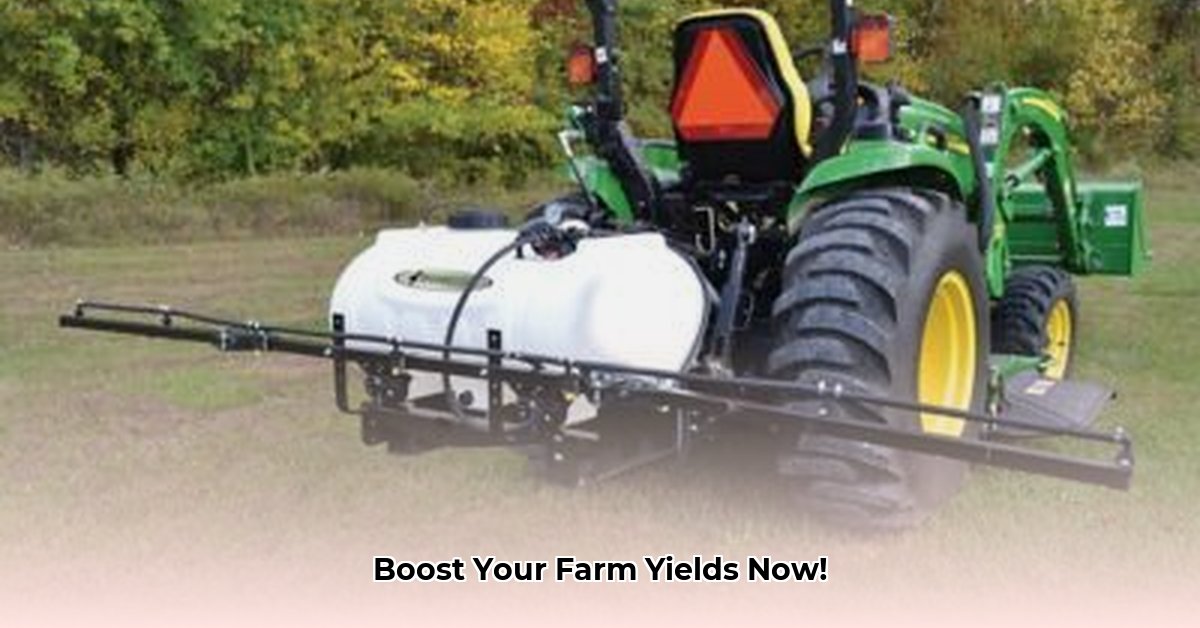
Tractor Supply 3-Point Sprayers: Your Partner in Sustainable Agriculture
Sustainable farming demands precision and efficiency. Tractor Supply's 3-point sprayers offer a powerful solution, enabling farmers to maximize yields while minimizing environmental impact. This guide provides actionable steps to optimize your sprayer's use for sustainable agriculture, improving both your bottom line and environmental stewardship. For more information on tractor implements, check out this helpful resource: Tractor Implements.
Getting Started with Your Tractor Supply 3-Point Sprayer
Before applying chemicals, understanding your sprayer is crucial. Your 3-point sprayer isn't just equipment; it's a precision instrument designed for accurate chemical application, reducing waste and maximizing effectiveness (think of a surgical scalpel versus a paintbrush). Key features to consider include a leak-proof tank, adjustable spray nozzles, and a dependable pump. Investing in quality ensures longevity and efficiency. But what are the key elements to getting the most from your investment?
Calibration: The Foundation of Efficient Spraying
Improper calibration leads to wasted chemicals and water, harming your budget and the environment. Precise calibration ensures you apply the correct amount, neither more nor less. Follow the manufacturer’s instructions carefully. Think of it as a recipe; precise measurements lead to optimal results.
Step-by-Step Calibration:
- Fill and Measure: Completely fill the tank with water, precisely measuring the volume.
- Define Test Area: Select a section of your field and accurately measure its area. This becomes your calibration test area.
- Spray and Time: Spray the test area, timing the process.
- Measure Output: Precisely measure the amount of water used to cover the test area.
- Calculate and Adjust: Use measurements from steps 2 and 4 to calculate your application rate. Adjust sprayer settings until the desired rate is achieved. This may require several iterations.
Don't forget: Regular calibration, ideally before each spraying session, safeguards against drift and ensures consistent application. This is crucial for minimizing chemical use and maintaining environmental responsibility. Is your current calibration process efficient, or could you streamline it for even better results?
Optimizing Your Sprayer for Sustainable Practices
Beyond calibration, several strategies enhance sustainable spraying:
Nozzle Selection: Tailoring Application to Crops and Conditions
Different nozzles create varying spray patterns. Larger droplets reduce drift in windy conditions but may compromise coverage. Smaller droplets offer better coverage but are more susceptible to wind. Select nozzles based on your crops, weather, and the specific chemical being used. Experimentation helps determine the optimal combination for your farm conditions. Understanding the impact of nozzle choice on spray drift is vital for protecting neighboring environments. What factors influence your nozzle choice most?
Targeted Spraying: Precision for Reduced Chemical Use
Avoid blanket spraying; instead, focus on areas needing treatment. This precision approach drastically reduces chemical use, protects beneficial insects, and minimizes environmental impact. Concentrate your efforts on specific weed problems, pests, or disease outbreaks. This method protects non-target areas and minimizes the overall environmental footprint of your operation. How much could you reduce your chemical usage by adopting targeted spraying?
Maintenance: Preserving Sprayer Efficiency and Longevity
Regular maintenance is essential. After each use, thoroughly clean the tank and nozzles. Inspect hoses and fittings for leaks or damage. Keeping detailed maintenance records helps identify potential issues early and supports better budgeting for repairs. Proactive maintenance significantly extends your sprayer's lifespan and ensures consistent performance, minimizing downtime. Is your current maintenance schedule sufficient to prevent costly repairs down the line?
Integrating Technology: Smart Spraying for the Modern Farmer
GPS and auto-steer systems further enhance spraying accuracy. These technologies minimize overlaps, reducing chemical use and maximizing efficiency. They also improve coverage, ensuring all targeted areas receive the appropriate chemical application. How might integrating these technologies impact the long-term sustainability of your farm?
Sustainable Spraying: A Holistic Approach
Successful sustainable spraying involves combining the right technology with sound agricultural practices. Remember, the long-term benefits of sustainable farming—increased yields, reduced costs, and greater environmental stewardship—far outweigh any short-term challenges.
Overcoming Challenges
While the benefits are significant, challenges exist. The initial investment can be substantial, and learning new technologies requires time and effort. However, many government programs offer subsidies and training to assist farmers. Remember that the long-term gains in yield, cost savings, and environmental responsibility far outweigh initial investments and training time.
By implementing these strategies, you'll effectively harness the power of your Tractor Supply 3-point sprayer to achieve sustainable and productive farming practices. Embrace the journey toward sustainable agriculture—your crops and the planet will thank you.